
www.intralogisticsmag.com
10
'26
Written on Modified on
Energy and Intralogistics Optimization at an Airport Hub
DHL Aviation and STILL collaborate to integrate a lithium-ion forklift fleet and an energy management system at the Brussels hub.
www.still.fr
Industry Sector: Transportation, logistics, and supply chain.
Application Area: Intralogistics, material handling, and energy management.
DHL Aviation and materials handling equipment manufacturer STILL have collaborated to deploy a new intralogistics fleet based entirely on lithium-ion technology at the Brussels airport hub. This joint project aims to meet the demanding requirements of just-in-time express logistics while optimizing the facility's power consumption through centralized software management.
Operational Challenges and Spatial Constraints
The Brussels hub operates within a global express network, shipping pharmaceutical products and mechanical parts to more than 220 countries. The facility spans 330,000 square meters but requires high logistical density to process cargo volumes. Marcel De Kelver, Senior Manager of Facilities & Equipment at DHL Aviation, specifies the scale of the site: "Through our hub, we handle the processing, sorting, as well as air and road transport of express shipments. We evolve in a quasi-continuous operational environment, 24/7. Every night, more than 200,000 shipments are sorted." The technological transition therefore had to guarantee the continuity of these operations, optimize floor space, and limit the impact on the local power grid.
Fleet Architecture and Decentralized Charging
The chosen technical solution includes the integration of 117 new STILL materials handling trucks. This fleet consists of EXH electric pallet trucks for truck loading, and RX 20 and RX 60 electric forklifts for heavy loads. The adoption of lithium-ion batteries alters the spatial organization of the site: it eliminates the need for a dedicated central battery-charging and battery-changing station. The equipment is now recharged in a decentralized manner, directly within its areas of operation. This architecture reduces empty internal travel times and decreases accident risks associated with truck traffic.
Dynamic Energy Management and Peak Shaving
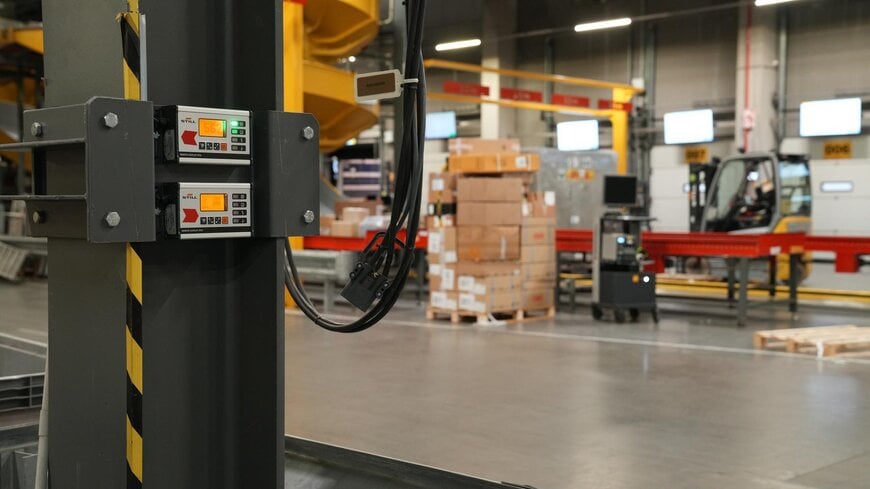
To support this new fleet without overloading the airport's electrical infrastructure, 93 high-efficiency chargers were installed and connected to STILL's Smart Energy system. The charging infrastructure is divided into ten groups, each managed by a Smart Energy Unit that communicates with the facility's global energy management system.
The management algorithm identifies the state of charge and power requirements of each battery to assign dynamic priorities. Thierry Morreel, Key Account Manager of Energy at STILL Benelux, explains this mechanism: "Pressure on the power grid is becoming increasingly significant. We must therefore distribute the available energy as efficiently as possible when charging multiple batteries simultaneously, particularly when they require fast charging between two operational cycles."
Measurable Results and Cost Control
The synchronization between charger consumption, conveyor systems, and solar energy sources allows for peak shaving. By avoiding exceeding the subscribed power capacity, the logistics operator eliminates the associated financial penalties. The integration of these charging and management technologies has enabled DHL Aviation to record a 16% reduction in energy consumption dedicated to materials handling. All operational data is centralized on the manufacturer's software platform, providing technical teams with continuous visibility into the fleet's utilization cycles and energy parameters.
Edited by Lekshman Ramdas, Induportals Editor – adapted by AI.
www.still.com
