
www.intralogisticsmag.com
28
'26
Written on Modified on
Automated warehouse system improves distribution efficiency
TGW Logistics delivers a scalable shuttle-based distribution center for Bausch + Lomb to increase capacity and flexibility.
www.tgw-group.com
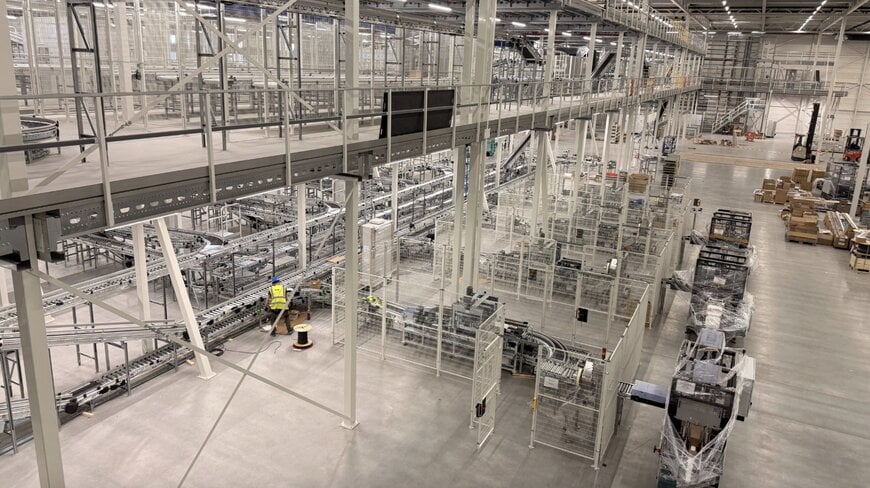
Bausch + Lomb faced increasing constraints at its existing distribution site near Schiphol Airport. Aging automation systems, changing order structures and rising customer expectations made it difficult to maintain efficiency and service levels.
The existing intralogistics setup could no longer support required throughput or flexibility. Instead of upgrading legacy systems, the company opted to build a new distribution center in Aalsmeer, designed to meet current operational needs while supporting future growth.
Defining requirements for a future-ready facility
The new facility was developed with clear operational objectives:
- Increased processing capacity and order volumes
- Greater flexibility for changing market demands
- Higher automation with reduced operating costs
- Sustainable building design with BREEAM certification
- Retention of the existing location to maintain integrated operations
The goal was to create a scalable system capable of adapting to evolving logistics requirements without compromising quality or traceability.
Selecting an integrated automation solution
Following a detailed evaluation process, TGW Logistics was selected as the automation partner.
The decision was based on system performance, scalability and alignment with operational needs. The proposed solution emphasized ergonomics, maintainability and long-term flexibility, supporting both current workflows and future expansion.
Shuttle system enables high-density storage and throughput
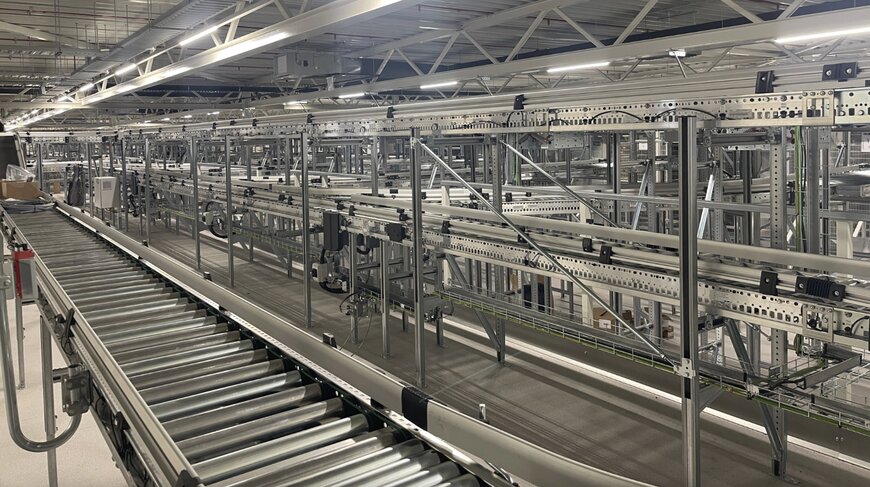
At the core of the new distribution center is a shuttle-based storage system with more than 135,000 storage locations, expandable to 150,000, with additional capacity planned for future phases.
Approximately 300 robots handle tote storage and retrieval, achieving up to 8,700 movements per hour. The system uses double-deep storage to maximize space utilization.
Goods-to-person workstations equipped with light-guided picking systems improve accuracy and efficiency, while consolidating operations into a single integrated picking zone.
Integrated automation across picking, packing and dispatch
Automation extends beyond storage and picking into packing and outbound logistics:
Selecting an integrated automation solution
Following a detailed evaluation process, TGW Logistics was selected as the automation partner.
The decision was based on system performance, scalability and alignment with operational needs. The proposed solution emphasized ergonomics, maintainability and long-term flexibility, supporting both current workflows and future expansion.
Shuttle system enables high-density storage and throughput
At the core of the new distribution center is a shuttle-based storage system with more than 135,000 storage locations, expandable to 150,000, with additional capacity planned for future phases.
Approximately 300 robots handle tote storage and retrieval, achieving up to 8,700 movements per hour. The system uses double-deep storage to maximize space utilization.
Goods-to-person workstations equipped with light-guided picking systems improve accuracy and efficiency, while consolidating operations into a single integrated picking zone.
Integrated automation across picking, packing and dispatch
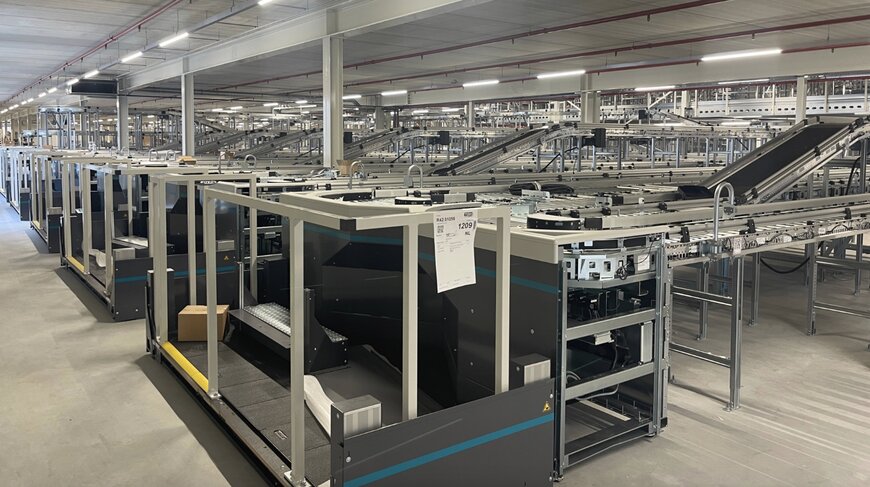
Automation extends beyond storage and picking into packing and outbound logistics:
- Automated carton erection, sealing and size adjustment
- Reduced shipping volume and transport costs
- Secondary shuttle system acting as a buffer
- Automated palletizing for streamlined dispatch
The system ensures consistent product handling while maintaining high throughput across all stages of the process.
Ensuring traceability and compliance
Given the nature of medical and optical products, traceability is a critical requirement. The system links each product serial number to its corresponding customer order.
Automated labeling and documentation ensure compliance with industry standards while reducing manual intervention and potential errors.
Workforce transformation and change management
The transition to a highly automated warehouse shifts employee roles rather than replacing them. Repetitive tasks are handled by automation, while personnel focus on system supervision, control and process optimization.
A structured change management approach, including training sessions and site visits, supported employee adoption and ensured continuity during the transition.
Designed for future expansion
The facility has been designed with additional space and system architecture to support future automation, including further robotic applications for picking and internal transport.
This phased approach allows the company to prioritize operational stability before introducing additional technologies.
A scalable model for modern distribution
The new distribution center demonstrates how integrated automation and shuttle-based storage systems can transform logistics operations. By combining high-density storage, goods-to-person picking and end-to-end automation, Bausch + Lomb has established a flexible and scalable logistics platform capable of meeting future demands.
Edited by Romila DSilva, Induportals Editor, with AI assistance.
Ensuring traceability and compliance
Given the nature of medical and optical products, traceability is a critical requirement. The system links each product serial number to its corresponding customer order.
Automated labeling and documentation ensure compliance with industry standards while reducing manual intervention and potential errors.
Workforce transformation and change management
The transition to a highly automated warehouse shifts employee roles rather than replacing them. Repetitive tasks are handled by automation, while personnel focus on system supervision, control and process optimization.
A structured change management approach, including training sessions and site visits, supported employee adoption and ensured continuity during the transition.
Designed for future expansion
The facility has been designed with additional space and system architecture to support future automation, including further robotic applications for picking and internal transport.
This phased approach allows the company to prioritize operational stability before introducing additional technologies.
A scalable model for modern distribution
The new distribution center demonstrates how integrated automation and shuttle-based storage systems can transform logistics operations. By combining high-density storage, goods-to-person picking and end-to-end automation, Bausch + Lomb has established a flexible and scalable logistics platform capable of meeting future demands.
Edited by Romila DSilva, Induportals Editor, with AI assistance.
