
www.intralogisticsmag.com
10
'26
Written on Modified on
AI and 3D Vision Transform Mixed Palletizing
Photoneo highlights how advances in artificial intelligence and 3D vision are enabling reliable automation of mixed-case palletizing in warehouses and distribution centers.
www.photoneo.com
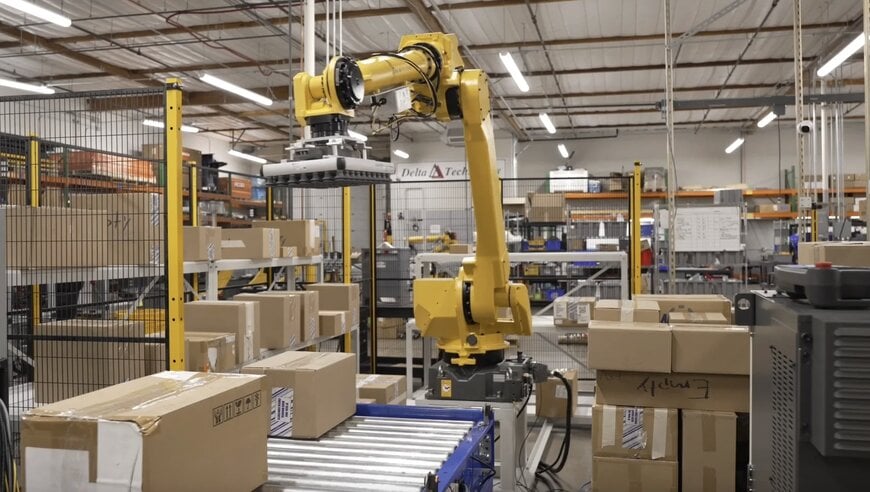
Mixed-case palletizing has long resisted automation due to its cognitive and physical complexity, but recent progress in artificial intelligence and 3D vision is enabling robots to build stable, store-ready pallets with speed, accuracy and adaptability.
Why mixed palletizing matters
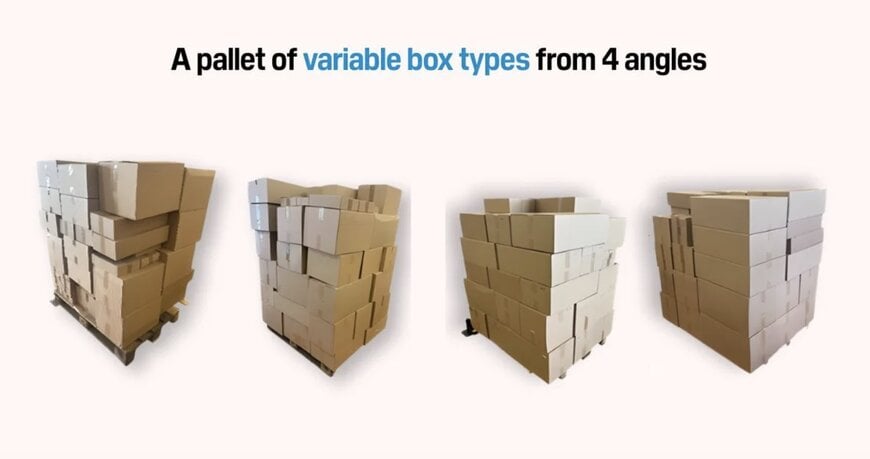
Mixed-case palletizing is a core operation in modern logistics. It supports just-in-time retail replenishment, e-commerce order fulfillment and cross-docking by combining multiple stock keeping units (SKUs) on a single pallet. Unlike single-SKU palletizing, cases arrive in unpredictable sequences and differ in size, weight, surface properties and fragility.
For decades, this variability has made mixed palletizing one of the last largely manual processes in warehouses. Human operators continuously balance weight distribution, structural stability and store-friendly sequencing—tasks that require spatial reasoning and real-time judgment.
Technical barriers to automation
Traditional robotic systems struggled with three main challenges. First, extreme item variability overwhelmed conventional 2D and early 3D vision systems, particularly with glossy packaging, shrink wrap or dark cartons. Second, mixed palletizing is inherently unstructured: robots must identify unknown cases and decide optimal placement dynamically rather than follow pre-programmed patterns. Third, the cognitive complexity of balancing stability, density and destination-specific rules exceeded the capabilities of rule-based automation.
As a result, many facilities relied on labor-intensive processes or large, complex conveyor and sorting systems that still required human intervention at the pallet-building stage.
Operational cost of manual palletizing
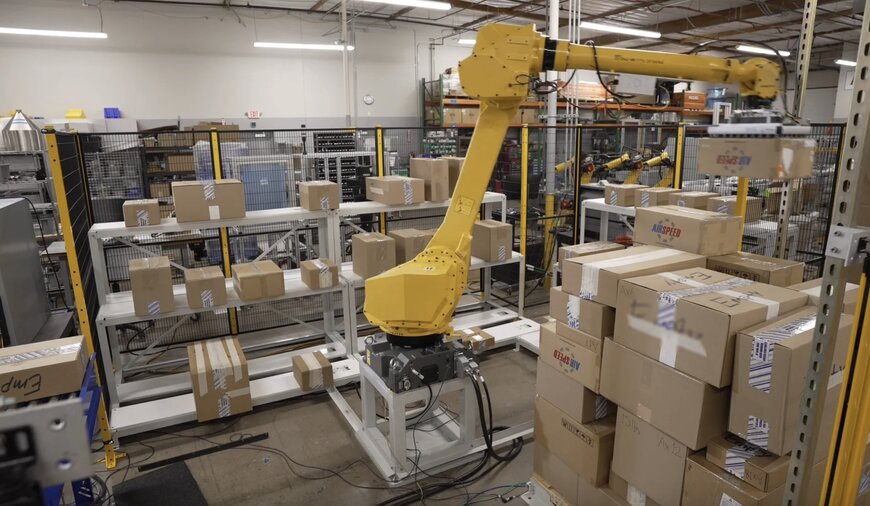
Manual mixed palletizing limits throughput, typically to 180–360 cases per hour per worker, and introduces variability in pallet quality as fatigue increases. Inconsistent stacking can cause load shifts and damage during transport, while manual verification of mixed pallets often leads to barcode errors and inventory discrepancies.
From a workforce perspective, repetitive lifting and twisting result in high injury rates and turnover, making staffing increasingly difficult as labor shortages grow. These factors have driven renewed interest in automation despite past failures.
A software-defined approach to palletizing
Recent breakthroughs treat mixed palletizing as a data and intelligence problem rather than a purely mechanical one. Central to this shift is advanced motion planning software that abstracts robot programming and optimizes movements in real time.
Jacobi Robotics has developed a software-defined motion planning platform designed to work with robots from multiple manufacturers, including ABB, FANUC, KUKA, Yaskawa and Universal Robots. This robot-agnostic architecture allows system designers to select hardware based on payload and reach requirements without being locked into proprietary ecosystems.
The platform computes time-optimized, collision-free trajectories while simultaneously considering pallet stability, case properties and environmental constraints. In practice, this approach can reduce cycle times by up to 30% compared with conventional path planning and cut commissioning time from weeks to hours.
Motion-immune 3D vision
High-quality decision-making depends on accurate perception. A long-standing collaboration with Photoneo addresses this requirement through a 3D vision approach known as Parallel Structured Light.
Unlike conventional structured light systems that require static scenes, or time-of-flight systems that trade accuracy for speed, Parallel Structured Light captures a full 3D scan in a single snapshot. This makes it effectively immune to motion blur and capable of scanning objects moving at up to 40 meters per second. The result is high-resolution, low-noise point clouds suitable for real-time robotic handling without stop-and-scan delays.
From perception to closed-loop execution
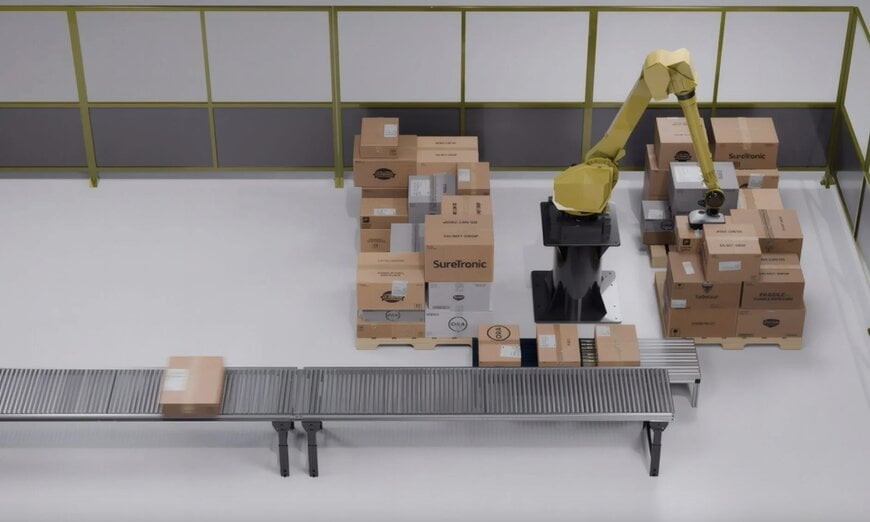
Modern mixed palletizing systems integrate perception, planning and execution into a continuous feedback loop. Randomly sequenced cases arrive from upstream processes and are scanned in motion to determine dimensions, orientation and identity. This data is verified against warehouse management system records before being passed to AI-driven planning software.
Placement algorithms determine optimal positions on the pallet based on configurable rules for weight, crush strength and store requirements, while motion planners generate the fastest safe robot trajectories. After placement, overhead scanners verify the pallet state against the digital plan, enabling immediate detection of errors or shifts.
Measurable performance gains
These integrated systems deliver 300–1,000 cases per hour per station, representing two- to fivefold throughput improvements over manual operations. Automated verification improves inventory accuracy by eliminating barcode errors and reducing shipment rejections.
Beyond productivity, the flexibility of software-defined systems allows rapid reconfiguration for new SKUs, seasonal demand or changing customer requirements. Robot-agnostic architectures also protect long-term investments by enabling hardware upgrades without re-engineering the entire system.
Industry impact
Mixed palletizing automation is gaining traction across food and beverage, consumer packaged goods, retail and e-commerce, third-party logistics and pharmaceutical distribution. In each case, the ability to handle high SKU diversity, maintain traceability and adapt quickly to change is becoming a competitive differentiator.
As AI-driven motion planning and advanced 3D vision mature, mixed-case palletizing is shifting from a labor-intensive bottleneck to a scalable, intelligent process—unlocking faster fulfillment, safer workplaces and more resilient supply chains.
www.photoneo.com
