
www.intralogisticsmag.com
14
'26
Written on Modified on
Honeywell launches warehouse software and irregular parcel sorting system
New platform and sortation solution improve automation flexibility and enable efficient handling of oversized parcels in logistics and e-commerce operations.
www.honeywell.com
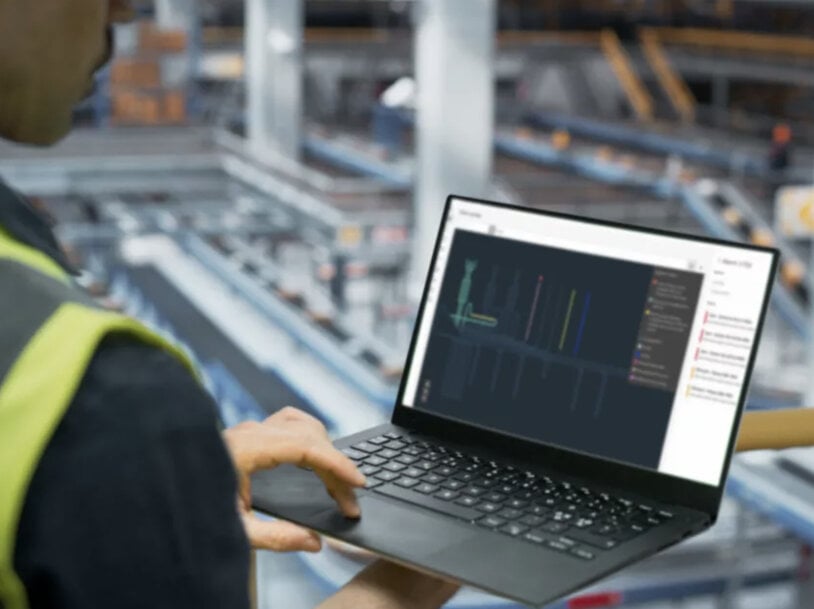
Logistics, e-commerce, and distribution center operations increasingly require adaptable automation systems to manage fluctuating demand and diverse parcel types. Honeywell has introduced a warehouse software platform alongside a sortation solution designed to address both system integration challenges and the handling of irregular items.
The Honeywell Intelligrated Momentum Core platform combines warehouse execution, control, and machine control functions into a unified software environment. At the same time, the IntelliSort Irregulars Sorter targets one of the most resource-intensive processes in distribution centers: the handling of oversized, heavy, or нестably shaped parcels.
Momentum Core is designed to simplify how warehouse automation systems are deployed and modified. Traditional systems often require custom engineering or downtime for updates, particularly when workflows change or cybersecurity requirements evolve. By contrast, the new platform uses a standardized code base with a configurable layer accessible to end users, allowing operational adjustments without replatforming.
Unified control and scalable warehouse automation
A key aspect of the platform is the integration of multiple software layers into a single interface. Warehouse execution software, warehouse control systems, and machine-level controls are combined to provide a unified view of operations, including monitoring, configuration, and reporting.
Built on the Ignition platform from Inductive Automation, the system incorporates supervisory control and data acquisition (SCADA) capabilities. This architecture enables operators to manage and scale automation systems more efficiently, particularly in facilities where workflows frequently change due to seasonal demand or evolving order profiles.
From an implementation perspective, the modular structure allows distribution centers to deploy only the required functionalities initially and expand over time. This reduces upfront complexity while supporting long-term scalability.
Automating irregular parcel handling
The IntelliSort Irregulars Sorter addresses inefficiencies associated with parcels that fall outside standard dimensions or weight ranges. Although such items typically represent a smaller share of total volume, they often require disproportionate manual handling, contributing to higher labor costs, increased maintenance, and potential system bottlenecks.
Engineered to process between 3,000 and 5,000 irregular parcels per hour, the system is designed to accommodate variations in size, weight, and shape. Its modular configuration allows integration into existing sortation infrastructure, enabling facilities to automate a process that is frequently handled manually or with semi-automated systems.
By improving consistency in how irregular items are processed, the sorter can help reduce mis-sorting, minimize downtime caused by jams or equipment strain, and stabilize overall throughput.
Addressing flexibility and operational efficiency
Together, the software platform and sortation system respond to two persistent challenges in warehouse automation: the need for adaptable control systems and the efficient processing of non-standard parcels. As order profiles become more complex, particularly in e-commerce and third-party logistics (3PL) operations, both software flexibility and physical handling capabilities play a critical role in maintaining performance.
While similar SCADA-based warehouse control platforms exist on the market, differentiation typically lies in the level of integration between software layers and the ease of reconfiguration. Likewise, sortation systems for irregular items vary in throughput capacity and compatibility with existing infrastructure, making these factors key considerations for system selection.
Edited by Natania Lyngdoh, Induportals Editor — Adapted by AI.
www.honeywell.com
