
www.intralogisticsmag.com
14
'26
Written on Modified on
Phased warehouse automation using open control systems
Beckhoff Automation UK outlines how PC-based control enables incremental upgrades in warehouse automation without disrupting ongoing operations.
www.beckhoff.com
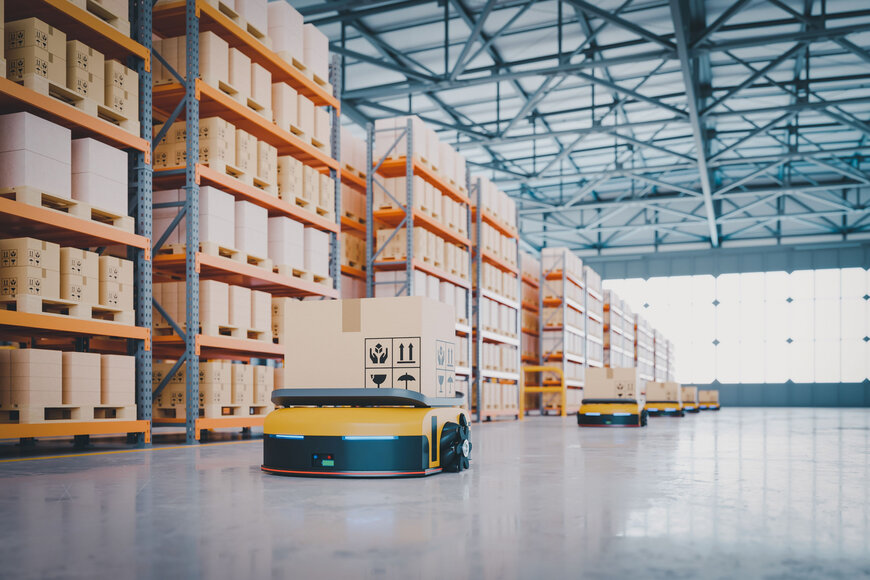
Modern warehouse automation increasingly relies on phased implementation strategies that allow operators to expand capacity and functionality without halting existing operations. PC-based control and open architecture systems provide a technical foundation for integrating new automation into brownfield intralogistics environments.
Scaling automation in live intralogistics environments
Warehouse expansion typically occurs within active facilities where conveyor systems, sortation equipment, and picking zones are already in continuous operation. In such environments, automation is not deployed from scratch but integrated into existing infrastructure, creating both mechanical and control-level complexity.
Legacy systems often include equipment from multiple vendors and generations, with heterogeneous interfaces and incomplete documentation. This increases the risk of unintended system interactions when modifications are introduced. As a result, the primary technical challenge is not only increasing throughput but doing so without compromising operational continuity.
Phased implementation as a risk mitigation strategy
A phased approach allows new automation modules such as conveyor sections or picking cells to be deployed, tested, and commissioned independently. This reduces system-wide risk by isolating faults and avoiding a single large-scale cutover.
Effective phased deployment depends on clearly defined system boundaries. Control ownership, data exchange requirements, and failure responses must be specified in advance to ensure predictable system behaviour. Testing procedures must validate interoperability between legacy and new systems before integration into live operations.
Fallback strategies are also essential. In case of communication or integration failure, systems must revert to a safe operational state without affecting the broader warehouse workflow.
Role of PC-based control in modular integration
PC-based control systems provide a unified platform for logic execution, motion control, visualisation, and communication. Their modular structure allows incremental addition of control functions, enabling operators to extend automation capabilities without replacing entire control systems.
This modularity supports the evolution of a digital supply chain, where control logic and data exchange can be adapted as operational requirements change. Instead of fixed-function controllers, PC-based systems allow flexible reconfiguration, which is critical in facilities undergoing continuous expansion.
Distributed architectures and open interfaces
Distributed control architectures enable localised deployment of automation components across different zones within a warehouse. This reduces the need for centralised system redesign when new equipment is added.
Open interfaces further facilitate integration by allowing communication between systems from different suppliers. This is particularly relevant in brownfield sites, where interoperability between legacy and new equipment is essential for maintaining operational stability.
Together, distributed control and open architecture create a scalable framework for incremental automation, aligning with the requirements of complex intralogistics systems.
Industry context: retrofitting over new builds
Warehouse automation strategies are increasingly shaped by structural constraints in the logistics sector. The UK warehousing market has expanded by 61 per cent since 2015, reaching close to 700 million square feet, with significant growth in large-scale facilities. At the same time, a substantial portion of European warehouse infrastructure is more than a decade old, highlighting the need for retrofitting rather than relying solely on new developments.
Limited availability of land and high-quality buildings further reinforces the importance of upgrading existing facilities. In this context, phased automation supported by flexible control systems provides a practical pathway to increase capacity and efficiency.
Enabling continuous operation during upgrades
Incremental automation strategies allow warehouse operators to maintain throughput while introducing new capabilities. By combining PC-based control with distributed architectures, facilities can evolve without major operational interruptions.
This approach reflects a shift in warehouse automation from large-scale system replacement toward continuous, modular improvement. As intralogistics systems become more complex and interconnected, the ability to upgrade in phases becomes a key technical requirement for maintaining performance and reliability.
Edited by an industrial journalist Sucithra Mani with AI assistance.
www.beckhoff.com
