
www.intralogisticsmag.com
28
'26
Written on Modified on
Evaluating Warehouse Automation Beyond Facility Square Footage
InVia highlights that warehouse automation suitability depends on operational workflows rather than physical floor space.
inviarobotics.com
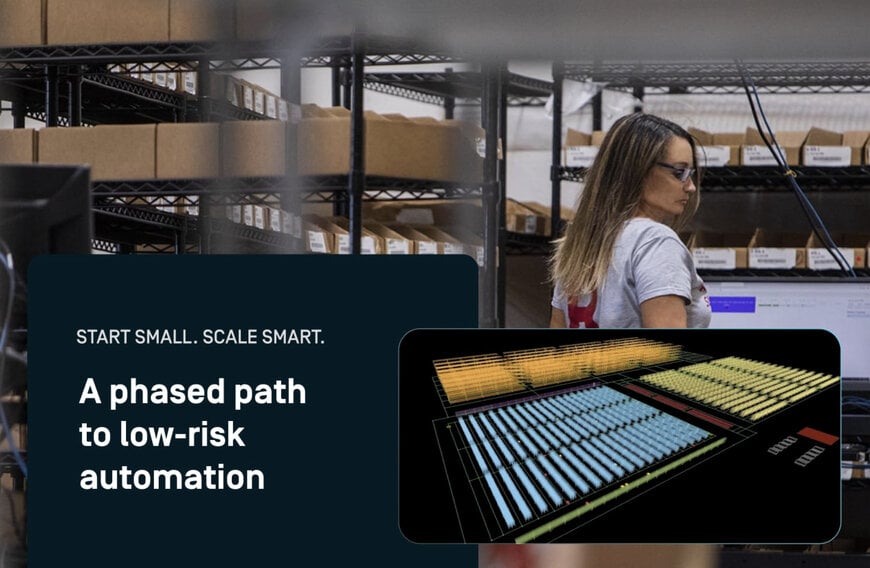
Physical warehouse size does not dictate the viability of fulfillment automation systems. Many mid-sized operations face significant daily friction from manual decision-making, shifting order priorities, and peak-volume pressure despite having compact footprints. Traditional physical automation requires specific facility constraints such as aisle space and clear height, leading smaller operators to mistakenly disqualify themselves from productivity-enhancing technologies.
A more effective evaluation framework focuses on order profiles, SKU complexity, and labor dynamics. By analyzing daily order volumes, average order sizes, item velocity, and travel distances, operators can identify the core drivers of fulfillment costs. Labor typically represents one of the largest operating expenses in a distribution center, making operational workflow analysis a more accurate benchmark than building dimensions.
Software-Led Orchestration as an Entry Point
Automation does not mandate a massive capital investment in robotic hardware. Facilities can initiate automation through artificial intelligence-enabled warehouse execution software that sits between existing enterprise systems and the warehouse floor. This software layer translates static inventory and order data into dynamic execution by sequencing tasks, balancing workloads, and directing personnel in real time.
Implementing software-guided execution first establishes baseline operational metrics without requiring manual audits. Platforms continuously track micro-movements, scan times, and task flows down to the second, uncovering hidden inefficiencies such as overstuffed pick faces or suboptimal item slotting. This intelligence allows facilities to optimize existing staffing levels and mitigate labor shortages before introducing physical hardware.
Phased Implementation and Hardware Integration
Structured deployment strategies minimize financial risk by tying technology adoption to specific operational constraints. A phased framework typically proceeds through distinct operational milestones:
- Establishing baseline performance metrics and data capture through execution software.
- Optimizing task orchestration, order batching, and dynamic picker routing to maximize current workforce output.
- Deploying targeted hardware, such as autonomous mobile robots, to manage high-density travel and repetitive retrieval tasks once software baselines are established.
- Scaling robot fleets incrementally based on proven return on investment during peak demand periods.
This progressive approach ensures that physical systems are supported by clean inventory data and structured processes rather than compensating for workflow bottlenecks.
Additional Context:
This section details technical specifications and competitive benchmarking not included in the original product announcement
Warehouse execution systems and artificial intelligence-driven orchestration platforms compete within the broader supply chain software market alongside traditional warehouse management systems and standalone material handling execution platforms. Comparative benchmarking evaluates systems based on API integration latency, real-time task reassignment frequency, and path-optimization algorithm efficiency. Software-only deployments typically target a reduction in picker travel distance by up to fifty percent, while integrated robotic systems measure performance through throughput increases at the unit and line levels relative to manual baseline operations.
Edited by Sucithra Mani, Induportals editor – adapted by AI.
www.inviarobotics.com
Additional Context:
This section details technical specifications and competitive benchmarking not included in the original product announcement
Warehouse execution systems and artificial intelligence-driven orchestration platforms compete within the broader supply chain software market alongside traditional warehouse management systems and standalone material handling execution platforms. Comparative benchmarking evaluates systems based on API integration latency, real-time task reassignment frequency, and path-optimization algorithm efficiency. Software-only deployments typically target a reduction in picker travel distance by up to fifty percent, while integrated robotic systems measure performance through throughput increases at the unit and line levels relative to manual baseline operations.
Edited by Sucithra Mani, Induportals editor – adapted by AI.
www.inviarobotics.com
