
www.intralogisticsmag.com
13
'25
Written on Modified on
Mecalux Explains Slave Pallet Benefits
Mecalux defines slave pallets, detailing their applications and benefits, especially for supporting non-standard loads in automated warehouse environments for stability.
www.mecalux.com
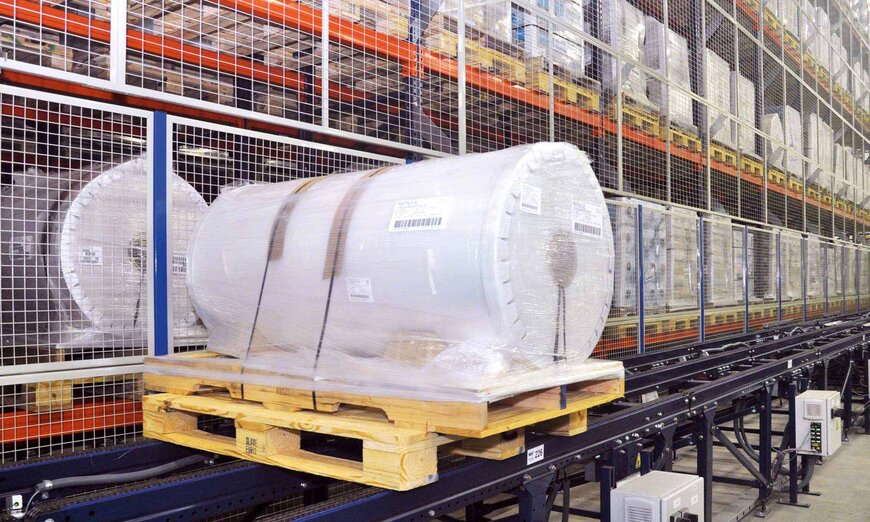
Slave pallets provide a sturdier base that’s compatible with automated handling equipmentSlave pallets provide a sturdier base that’s compatible with automated handling equipment practical, cost-effective solution used by companies across all industries to optimise storage and streamline goods handling processes. Today’s supply chain isn’t just about moving products from point A to point B — it’s also about minimising costs and adapting to constantly changing demand.
In this post, we explain what a slave pallet does, its main uses and benefits and why it’s become a go-to resource in automated environments and for moving non-standard loads. We’ll also look at how businesses in a variety of sectors are using slave pallets to improve their storage and internal transport workflows.
What is a slave pallet?
A slave pallet is an auxiliary platform — typically made of wood or plastic — used to support another pallet. This solution is particularly helpful when handling half pallets, pallets with non-standard measurements or those with lower-than-normal strength or quality.
Because slave pallets come into direct contact with both loads and handling equipment, they must meet minimum standards for quality, strength and dimensions. Working with pallets that don’t meet these requirements can lead to operational issues in the warehouse, such as difficulty moving products or instability during transport.
In some cases, the term captive pallet is used interchangeably with slave pallet since both are employed exclusively within a company’s internal logistics network, without leaving that environment.
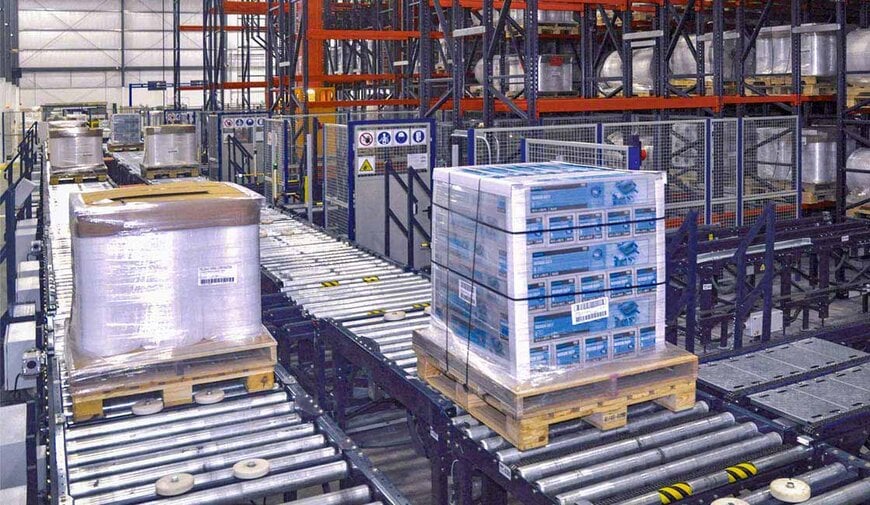
Slave pallets provide a sturdier base that’s compatible with automated handling equipment
Advantages of slave pallets
Slave pallets offer multiple benefits, especially for companies handling non-standard or structurally weaker loads:
- Stability. A uniform, sturdy base supports loads securely and reduces the risk of tipping or damage during handling and in-house transport.
- Compatibility with automated systems. Slave pallets standardise the base of a load, enabling smoother integration with automatic handling solutions and automated storage and retrieval systems (AS/RSs).
- Damage reduction. They act as a protective layer, preventing direct contact between the load and surfaces or equipment.
- Space optimisation. By improving load stability and uniformity, slave pallets help make better use of available surface area.
- Versatility. These platforms are compatible with a wide range of load types, sizes and formats, making them a flexible solution for various industries and logistics needs.
- Cost savings. Slave pallets minimise damage, reduce the need for repacking or load transfer and speed up storage and in-house transport processes.
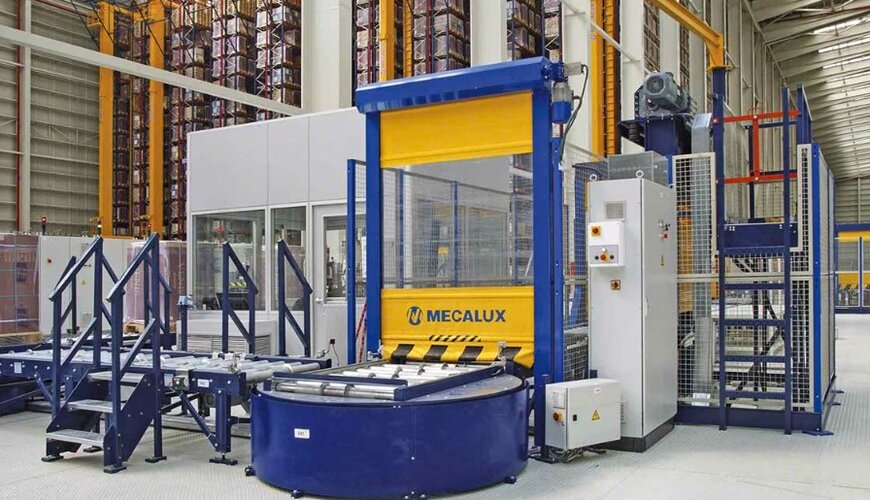
Inbound AS/RS inspection stations verify the condition of slave pallets
Slave pallets in automated warehouses
Automated storage and handling systems — such as stacker cranes, pallet conveyors and autonomous mobile robots (AMRs) — require stable loads with consistent sizes to operate efficiently. Slave pallets provide a standardised base that significantly reduces the risk of operational failures, protecting pallets and goods from potential damage during handling and transport within the facility.
AS/RSs feature inbound inspection stations, which check pallets’ dimensions and quality before releasing them into the logistics flow. These systems are designed to ensure that both the pallets and their contents meet safety and quality standards, avoiding incidents that could disrupt storage operations.
If a pallet fails to meet quality specifications, the system rejects it and replaces it with another that fulfils the required conditions. This process can be carried out automatically using a pallet stacker, a device that lifts the defective pallet to place a compliant one underneath.
In addition to addressing quality issues, slave pallets are used when handling half pallets. Since many AS/RSs aren’t designed to work with smaller unit loads, half pallets are placed on a standard-sized base (a slave pallet), which provides stability and facilitates handling. In some cases, two half pallets can even be stacked on a single slave pallet.
After a load has been transferred, it goes through the inbound inspection station for a second verification. It’s important to note that this process slightly increases the unit load’s overall height, so the system must be configured to accommodate these dimensional changes.
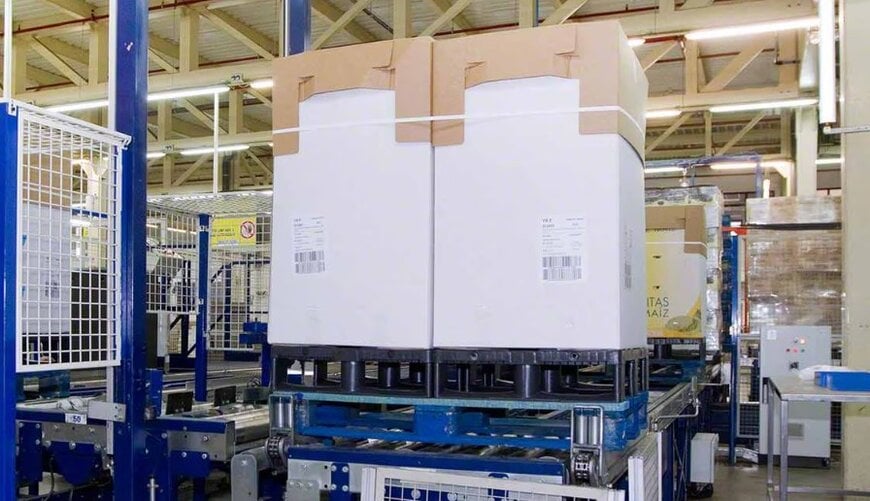
Two half pallets are placed on a larger one to facilitate handling and optimise warehouse space
Examples of companies that use slave pallets
Businesses across a wide range of industries work with slave pallets to streamline their logistics processes. These examples of Mecalux-equipped warehouses show how this functional solution improves operational efficiency:
- Clairefontaine. Most of the pallets arriving at this paper manufacturer’s logistics centre in Alsace (France) are non-standard. The facility’s pallet conveyor system features a stacker that places goods on slave pallets to enable their storage in any of the three automated warehouses.
- Ceramika Paradyz. This Polish tile manufacturer handles extremely heavy products, so it employs slave pallets to support stable, reliable handling. Its warehouse is outfitted with pallet stackers that deposit loads onto auxiliary platforms.
- Steris. This company’s logistics centre goes beyond conventional storage, also performing product sterilisation using ionising radiation (a process that eliminates microorganisms). All items are automatically conveyed to a restricted area off-limits to personnel. Slave pallets are essential to ensure safe, efficient handling throughout the process, particularly in automated, tightly controlled environments such as sterilisation zones.
Slave pallet: A practical solution to logistics challenges
Slave pallets are a proven way to boost handling efficiency, mainly in automated environments or when dealing with non-standard load sizes. They help stabilise loads, minimise issues in AS/RSs and streamline logistics flows in operations with specific handling requirements.
www.mecalux.com
Slave pallets are a proven way to boost handling efficiency, mainly in automated environments or when dealing with non-standard load sizes. They help stabilise loads, minimise issues in AS/RSs and streamline logistics flows in operations with specific handling requirements.
www.mecalux.com
