
www.intralogisticsmag.com
08
'26
Written on Modified on
Case standardization for variable grocery SKU handling
The adoption of tray-based conveyor systems addresses the logistical challenges posed by highly variable product dimensions and packaging within automated grocery warehouses.
www.tgw-group.com
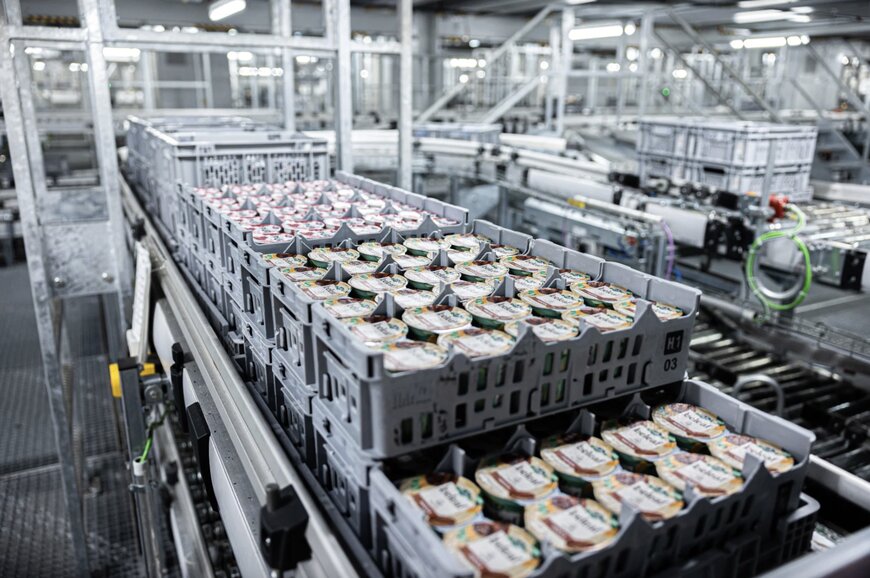
Grocery automation environments manage a diverse range of products, from uniform dry goods to fragile perishables and oversized liquids, which often lack standardized packaging for conveyance. This inherent variability introduces friction and mechanical complexity, leading to higher error rates and reduced throughput in conventional material handling systems. Standardizing on a uniform tray establishes a consistent surface dimension, allowing the automotive data ecosystem logic of the facility to operate on a single set of system parameters regardless of the individual product's shape, weight, or fragility.
Optimization of conveyor system design
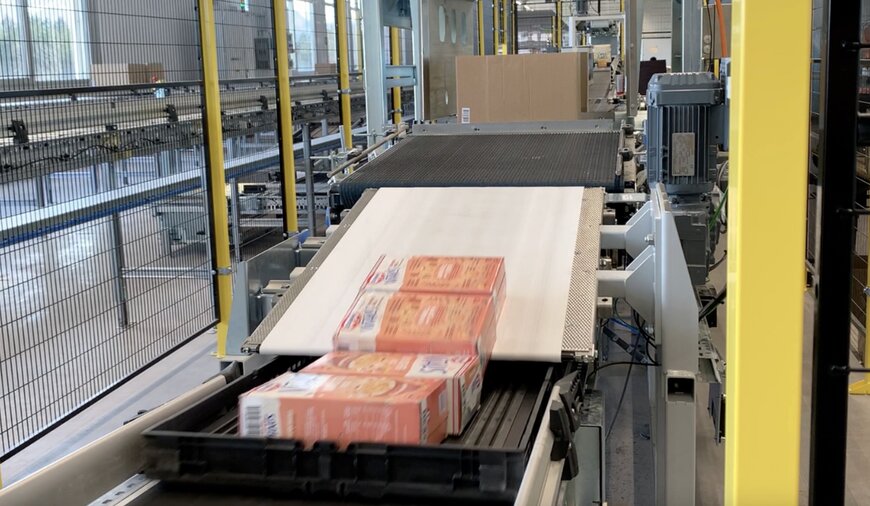
Implementing tray-based systems simplifies the engineering of conveyor layouts. By utilizing a dimensionally consistent surface, automation designers can implement:
- Tighter radii: Layout curves require smaller tolerances when handling uniform trays rather than inconsistent case sizes.
- Reduced accumulation gaps: System logic can maintain smaller, more reliable gaps between items, increasing total line density.
- Enhanced stability: Trays prevent unstable items from tipping, rotating, or creating uneven gaps, which are common causes of bottlenecks in high-throughput environments.
Impacts on storage density and ASRS efficiency
Standardizing with trays fundamentally alters storage utilization within an Automated Storage and Retrieval System (ASRS). Unlike conventional setups where one storage position is restricted to one carton, trays allow multiple SKUs to be consolidated in a single position, maximizing storage density. This technical approach reduces the number of retrieval cycles required for order fulfillment and facilitates a more efficient digital supply chain for inventory management. When an order is processed, the system retrieves a tray, picks the required units, and returns the remaining stock to storage without manual re-slotting.
Automated sanitation and maintenance protocols
In grocery logistics, maintaining food safety standards requires rigorous management of equipment cleanliness. TGW Logistics integrates automated tray management that includes high-tech camera systems for contamination detection.
Standardizing with trays fundamentally alters storage utilization within an Automated Storage and Retrieval System (ASRS). Unlike conventional setups where one storage position is restricted to one carton, trays allow multiple SKUs to be consolidated in a single position, maximizing storage density. This technical approach reduces the number of retrieval cycles required for order fulfillment and facilitates a more efficient digital supply chain for inventory management. When an order is processed, the system retrieves a tray, picks the required units, and returns the remaining stock to storage without manual re-slotting.
Automated sanitation and maintenance protocols
In grocery logistics, maintaining food safety standards requires rigorous management of equipment cleanliness. TGW Logistics integrates automated tray management that includes high-tech camera systems for contamination detection.
- Autonomous Routing: Contaminated trays are automatically diverted to a designated "hospital area" for cleaning.
- Buffer Management: Clean, empty trays are transferred to an automated buffer where they are stacked and held for reuse without manual intervention.
- Sanitation Compliance: This automated inspection ensures that spills or breakage do not cross-contaminate the broader system, meeting strict industry sanitation requirements.
Additional Context
This section details technical specifications and competitive benchmarking not included in the original product announcement.
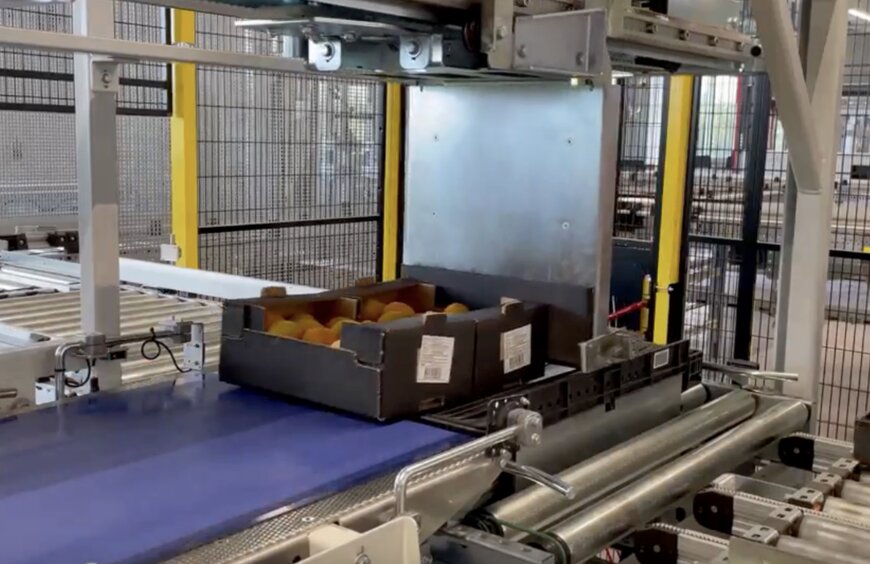
The use of tray-based conveyance provides a measurable technical advantage over direct-case handling systems, particularly in "lights-out" facilities. While direct-case conveyors often struggle with a "conveyability rate" (the percentage of SKUs that can be moved without manual intervention) of 70% to 85% due to flexible packaging, tray-based systems typically increase this to over 98%. Benchmarked against plastic tote systems, trays offer a lower vertical profile, which can increase overall ASRS storage density by up to 15% in the same cubic footprint. Furthermore, modern tray systems from providers like TGW Logistics or Dematic often utilize "friction-top" surfaces or mechanical clamping, which allow for acceleration rates exceeding 1.5 m/s², significantly outperforming the 0.5 m/s² limits usually applied to loose grocery cases to prevent toppling.
Edited by Romila DSilva, Induportals editor – adapted by AI.
This section details technical specifications and competitive benchmarking not included in the original product announcement.
The use of tray-based conveyance provides a measurable technical advantage over direct-case handling systems, particularly in "lights-out" facilities. While direct-case conveyors often struggle with a "conveyability rate" (the percentage of SKUs that can be moved without manual intervention) of 70% to 85% due to flexible packaging, tray-based systems typically increase this to over 98%. Benchmarked against plastic tote systems, trays offer a lower vertical profile, which can increase overall ASRS storage density by up to 15% in the same cubic footprint. Furthermore, modern tray systems from providers like TGW Logistics or Dematic often utilize "friction-top" surfaces or mechanical clamping, which allow for acceleration rates exceeding 1.5 m/s², significantly outperforming the 0.5 m/s² limits usually applied to loose grocery cases to prevent toppling.
Edited by Romila DSilva, Induportals editor – adapted by AI.
